Transcriptomic analysis has shown that the transcription factor Ikaros is essential for regulatory T cell function.
This web page was produced as an assignment for an undergraduate course at Davidson College.
The immune system is the body’s defender from harmful microorganisms. The immune system must maintain a delicate balance between providing powerful responses to pathogens and tolerating the other cells of the body. However, about one in ten people suffer from autoimmunity – a condition in which this balance is upset and the immune system attacks the host.1 A special subset of T cells, called regulatory T cells, are responsible for suppressing autoimmune responses. Relatively little is understood about this population of immune cells. Recently, Thomas et al.2 conducted a study to understand more about regulatory T cell development.
To understand the aims of this study, we must first understand what regulatory T cells are and where they come from. T cells are a part of the immune system which respond to specific pathogens. There are two kinds of T cells: helper T cells, which coordinate the immune response, and killer T cells, which kill infected or cancerous host cells. Together, these groups are known as the conventional T cells. There are also regulatory T cells, which work to dampen the immune response. Developing T cells normally become conventional T cells, but they can become regulatory T cells if they activate due to the host’s antigens.3
As part of the process of becoming a regulatory T cell, cells turn on the transcription factor Foxp3. Transcription factors are proteins which are necessary to express a gene. Different cell types have different transcription factors that are characteristic of that cell type. Foxp3 is the characteristic transcription factor of regulatory T cells. However, other transcription factors are also necessary for regulatory T cell function. The Ikaros family transcription factors Helios and Eos have well-defined roles in regulatory T cells, but whether Ikaros itself has a function was unclear. Thomas and his colleagues wanted to understand what Ikaros does in regulatory T cells.
To examine the role of Ikaros in regulatory T cells, the authors first had to create a mouse model. The mouse is the most common model organism in immunology, as mice have similar immune systems to humans and reproduce quickly. The authors wanted to compare regulatory T cells in normal mice to regulatory T cells in mice without Ikaros. To do so, they had to delete the Ikaros gene (called a knock-out). However, genes often have functions in multiple cell types, and knocking out the gene can cause significant changes throughout the mouse or even be fatal. Therefore, the authors had to create a conditional knockout in which Ikaros is only deleted in regulatory T cells. By expressing a DNA-editing enzyme under the control of Foxp3’s regulatory DNA, the authors were able to delete Ikaros only in regulatory T cells.
The authors then sequenced the RNA of regulatory T cells in both normal mice and Ikaros conditional knockout mice to learn how gene expression changes in the absence of Ikaros. They found that suppressors of regulatory T cell function were upregulated. In other words, deleting Ikaros made regulatory T cells, which stop immune responses, more like conventional T cells, which contribute to inflammation.
Next, the authors looked at where Ikaros and Foxp3 bind to DNA to determine whether the two transcription factors interact with each other. The authors used a method known as ChIP-seq, which works by isolating proteins of interest and sequencing fragments of DNA that were bound to them. The authors found that 74% of all Foxp3 binding sites were also occupied by Ikaros, and the loss of Ikaros in conditional knockout mice results in less Foxp3 binding at 70% of these sites. Therefore, Foxp3 and Ikaros collaborate to control regulatory T cell genes.
Finally, the authors wanted to know whether Ikaros-deficient regulatory T cells could control inflammation. To answer this question, the authors transferred regulatory T cells from either normal mice or Ikaros conditional knockout mice into mice with inflammatory bowel disease. Regulatory T cells from normal mice were able to control the T cell response and alleviate disease, while those from the Ikaros conditional knockout mouse were not able to control the immune response. Therefore, Ikaros is necessary for regulatory T cells to control inflammation.
Understanding regulatory T cells is a critical issue in immunology, with relevance to autoimmunity and cancer. This study has contributed to our understanding of how the gene expression programs of regulatory T cells are established. However, the study also has limitations. Mice in the study had an increased number of activated conventional T cells, indicating inflammation. The authors therefore cannot be sure that their observations are intrinsic to regulatory T cells. This issue can be addressed by repeating the experiment with female mice with the DNA-editing enzyme encoded at only one copy of Foxp3, which will not have inflammation because half of their regulatory T cells will be normal.
Due to its function in both conventional T cells and regulatory T cells, Ikaros is an attractive subject of future research in autoimmunity. It may also play a role in reducing sex- and gender-based health disparities, which are enormous challenges in medicine. Nearly four out of five patients with autoimmune conditions are women.4 There is an urgent need to better understand and develop therapeutics for autoimmune conditions to reduce these disparities. Overall, this study has made an important contribution to our understanding of regulatory T cells with relevance to basic science and potential downstream clinical applications.
Article by Sheridan Page. Contact the author at shpage@davidson.edu
© Copyright 2024 Department of Biology, Davidson College, Davidson, NC 28036
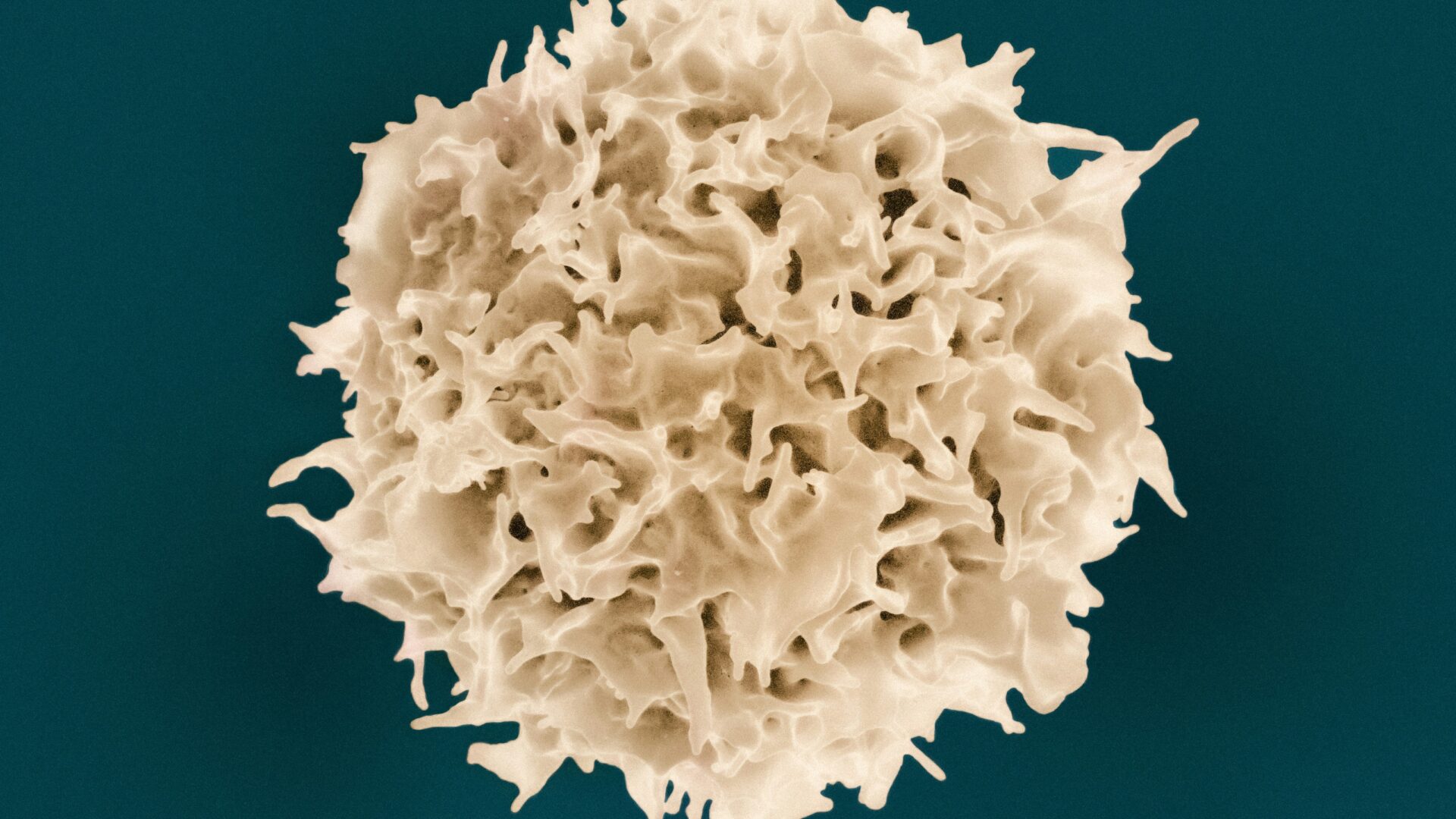
Thumbnail photo by National Institute of Allergy and Infectious Diseases on Unsplash
References:
1. Conrad, N. et al. Incidence, prevalence, and co-occurrence of autoimmune disorders over time and by age, sex, and socioeconomic status: a population-based cohort study of 22 million individuals in the UK. The Lancet 401, 1878–1890 (2023). Article
2. Thomas, R. M. et al. Foxp3 depends on Ikaros for control of regulatory T cell gene expression and function. eLife 12, (2024). Article
3. Tai, X. et al. How autoreactive thymocytes differentiate into regulatory versus effector CD4+ T cells after avoiding clonal deletion. Nat. Immunol. 24, 637–651 (2023). Article
4. Fairweather, D., Frisancho-Kiss, S. & Rose, N. R. Sex Differences in Autoimmune Disease from a Pathological Perspective. Am. J. Pathol. 173, 600–609 (2008). Article

This was a super interesting article to read! I know that much research has been done into autoimmune diseases for years and it seems like this is a very large break through for these kind of studies. I like how you have broken down the different genetic and cellular mechanisms and facts needed to understand this paper, explaining what a transcription factor is and how null mutants are made. I would say in the future it may help to be more specific when talking about the relationship between T cells and transcription factors (T cells need them to function, don’t necessarily act on them) and the relationship between autoimmune genes and the XX vs XY sex chromosomes. Overall I think this is a very clear and digestible article, great job!
This is a great article! It was very informative and presented all essential background information in lay terms that made it easy to read and follow. It definitely sounds a lot like the Ikaros gene plays a large role in proper regulatory T-cell function, but I am very curious about why the mice used in the study had an increased number of activated conventional T cells. Similarly, I also wonder if there could be a sex chromosome determining factor at play too- considering the sex-biased of autoimmune diseases. I was also wondering if this is the reason the future directions are focusing on female mice?
Fascinating article! It was super easy to read and follow, especially the methods! I am super interested to know more about the Ikaros-deficient Tregs that turn into conventional T cells. It would be interesting to know which group of conventional T cells the Tregs resemble the most (Th1, Th2, etc.). I would also be interested in learning more about the IBD trials. I would think that the IBD would get worse in the mice given Ikaros-deficient T cells since the Ikaros-deficient Tregs now acted as pro-inflammatroy T cells. It would also be beneficial to see if there are sex-differences in responses since you mentioned that autoimmunity is most common in females. I know Foxp3 is located on the X-chromosome, so perhaps this could be of interest for future studies!
You rocked this subject and have astounding insights. I also work hard in putting together great content about Cosmetics, feel free to visit QN5