The methylation of human DNA can provide insight into the risk factors and development of renal disease.
This web page was produced as an assignment for an undergraduate course at Davidson College.
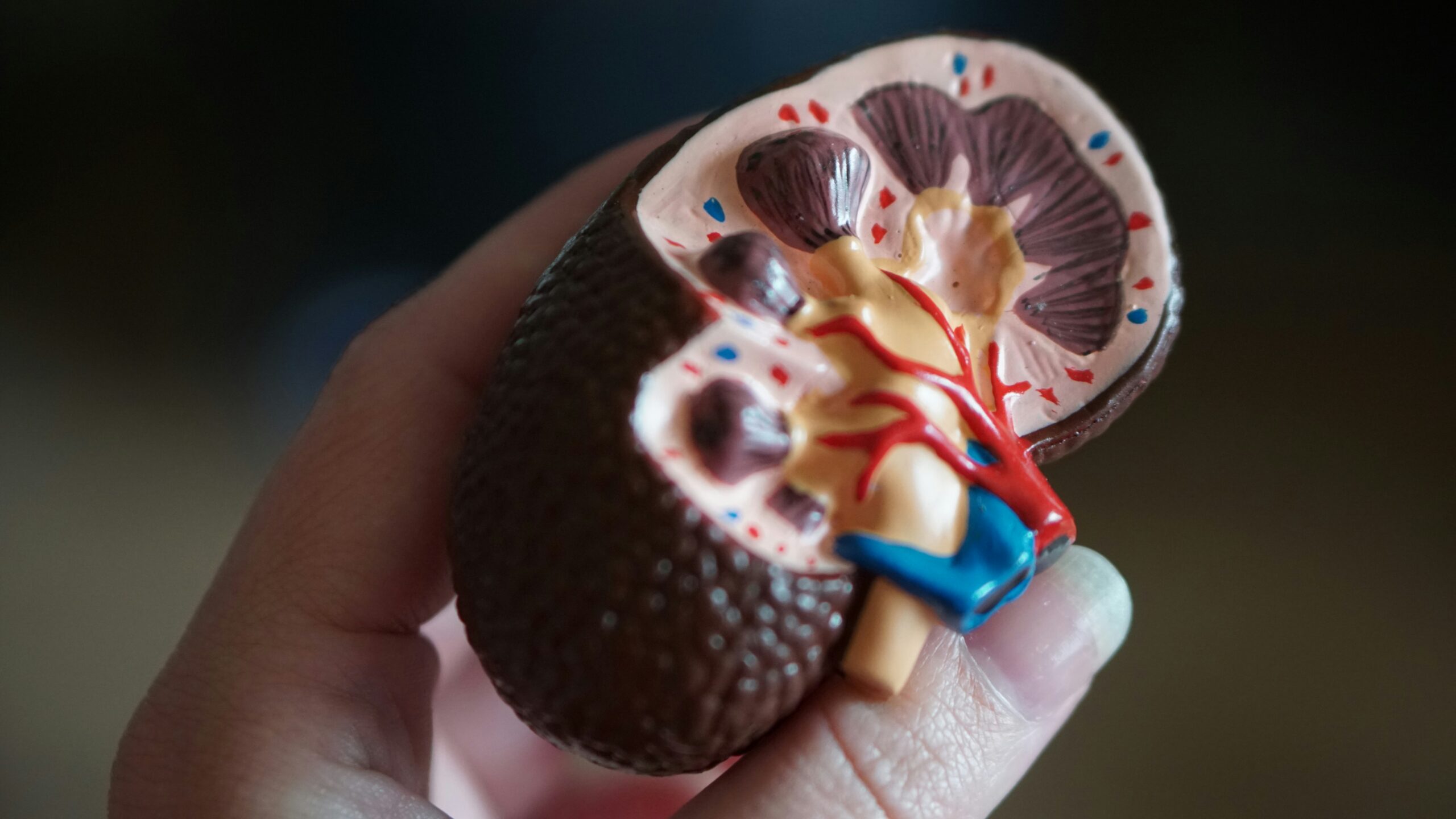
The field of genomics has rapidly expanded in recent years and provided new understanding of how our genes are expressed, especially in relation to disease. Renal disease is a common health issue facing more than 800 million people globally, accounting for about 10% of the human population [1]. Symptoms can range from nausea and fatigue to organ damage and kidney failure, and this disease greatly burdens individuals in low or middle-income areas where people do not have easy access to treatments or doctors. We have come to understand many of the risk factors and contributors to the development of renal disease; however, the field was lacking an in-depth analysis on how epigenetics may interact with the disease. This year (2024) a study published by Yan et al. explored the possible connections between renal disease development and the methylation of kidney DNA [2].
While all somatic cells in our body have the same genome, gene expression can be modified to make cells specialized to the tissues they exist in, which is studied as “epigenetics.” Epigenetic markers not only differ between tissue types but also, to a much lesser extent, between individual people. Gene expression can be modified in response to environmental stimuli, inherited from parents, or change based on the stage of development. Additionally, there are many ways that this modification can occur; however, this paper only focuses on methylation. When DNA is methylated, it causes the molecule to become more condensed which makes it difficult to access. If the gene cannot be accessed by transcription factors, it will not be expressed, essentially turning off that gene.
Many studies performed on the human genome are genome-wide association studies (GWAS) which provide broad information about the human genome and illuminate associations between areas of the genome and specific traits. GWAS studies take large samples of human genomes and compare them to identify potential genes associated with a trait or disease. There have been previous GWAS studies examining associations between different genes and renal disease, such as a 2023 study by Cassianne et al. which identified three locations in the genome associated with the development and progression of renal disease in humans [3]. However, while GWAS studies are helpful for identifying significant locations associated with traits such as kidney disease, many of the locations they identify are in the non-coding region of DNA, meaning that they do not directly produce the trait they are associated with. These non-coding regions can contain factors that regulate transcription even if they do not directly code for proteins. In order to understand how these important locations present in non-coding regions of DNA contribute to disease, it is necessary to perform epigenetic studies and compare the results with those from GWAS studies.
In the study performed by Yan and colleagues, they sampled kidney tissue from 14 different individuals and performed multiple tests to analyze both the genome and epigenome of subjects. This resulted in the analysis of over 60,000 different kidney samples from healthy individuals and those with chronic kidney disease (CKD) so that they could compare the epigenomic patterns of the different subjects. They found multiple differentially methylated areas of the genome that were associated with renal disease and they mapped these areas onto those found in previous GWAS studies. This combination of different methods helped to better understand the role that non-coding regions play in the expression of renal disease risk factors.
Many of the significant locations in the genome that were identified, both coding and non-coding, were associated with processes such as metabolism and the function of the proximal tubules in the kidneys. This information opens many new doors for possible diagnosis and treatment methods. For example, the researchers who conducted this study suggested integrating a methylation risk score (MRS) into consideration of a patient’s risk of developing renal disease. This would involve calculating someone’s risk for the condition based on their genomic and epigenomic profiles, which takes into consideration the coding and non-coding regions of their DNA. With this new tool in hand, doctors could predict someone’s risk for developing renal disease as well as suggest possible treatments or preventative measures based on their MRS.
While the results of this study do provide new innovative ways to identify and treat renal disease, which affects almost 10% of the global population, it is important not to overestimate the immediate impact that it will have. Many people are skeptical of medical tests that involve handling their DNA. For instance, Indigenous peoples have been mistreated and taken advantage of by the medical and governmental systems in the United States for many years, resulting in a mistrust of these organizations [4]. They have had their DNA and history used for research without consent, and often in a manner that disrespects their cultural beliefs and traditions. It is important to be mindful of the hesitancy many people have towards the medical system when introducing a new and unfamiliar technique so that they can be informed and comfortable with the way their DNA is being used.
Studies such as this one are an important step in understanding the development, identification, and treatment of diseases in humans; however, we must still consider the human aspect of the equation. It takes time to adjust to new science and medical treatments, especially when many groups have a negative history with governmental and medical organizations. We must push to expand not only understanding of epigenetics and genetics, but also expand the inclusion of a diverse and representative group of people in the study of the human genome.
Bibliography
- Kovesdy C. P. . Epidemiology of chronic kidney disease: an update 2022. Kidney international supplements 12, 7–11(2022). https://doi.org/10.1016/j.kisu.2021.11.003
- Yan, Y., Liu, H., Abedini, A. et al. Unraveling the epigenetic code: human kidney DNA methylation and chromatin dynamics in renal disease development. Nat Commun 15, 873 (2024). https://doi.org/10.1038/s41467-024-45295-y
- Robinson-Cohen, C., Triozzi, J. L., Rowan, B., He, J., Chen, H. C., Zheng, N. S., Wei, W. Q., Wilson, O. D., Hellwege, J. N., Tsao, P. S., Gaziano, J. M., Bick, A., Matheny, M. E., Chung, C. P., Lipworth, L., Siew, E. D., Ikizler, T. A., Tao, R., & Hung, A. M. . Genome-Wide Association Study of CKD Progression. Journal of the American Society of Nephrology 34, 1547–1559 (2023). https://doi.org/10.1681/ASN.0000000000000170
- Gwynne, K., Jiang, S., Venema, R., Christie, V., Boughtwood, T., Ritha, M., Skinner, J., Ali, N., Rambaldini, B., & Calma, T. . Genomics and inclusion of Indigenous peoples in high income countries. Human genetics 142, 1407–1416 (2023). https://doi.org/10.1007/s00439-023-02587-5
Contact Information: cahiers@davidson.edu
© Copyright 2022 Department of Biology, Davidson College, Davidson, NC 28036.

Nice article! I enjoyed learning about renal disease overall, as I did not know much about it. The background you provided on it, and on how genomics can push discovery and shape our understanding of disease was pertinent and super insightful. I especially liked how you did not limit your explanation of epigenetic regulation to methylation, but provided insight into DNA accessibility and other factors that play a role. When explaining the study though, I would have appreciated a little more detail on the methods used to identify methylation and the computational approach with which they interpreted their data. Nevertheless, the main points of the research paper came through and I understood its implications. Finally, I truly loved the amount of insight you provided on the ethical and societal implications of the disease. Thinking about why these findings are most probably not going to result in fast changes in treatment courses for renal disease and screening is just as important as the research itself. Great article!
I really enjoyed reading your summary! My article also dealt with understanding DNA methylation and what it can tell us about brain disorders so this was very interesting to read! Learning that GWAS excludes important information because it doesn’t include non coding factors is another similarity to my paper & it resulted in the researchers using long sequence reads to understand transcription factors, dna methylation, etc in untranslated regions of RNA. I wonder if the researchers in this study used a similar approach. I wonder if they took environmental factors into account & if they did what was the impact of those?