Development of Machine Learning techniques gives accurate medical predictions of the development of Pediatric Crohn’s Disease
Disclaimer: This web page was produced as an assignment for an undergraduate course at Davidson College.
Images courtesy of Liz Zhang, MD. Catherine E. Hagen, MD., Luisa Ricaurte Archila, MD.
Crohn’s Disease (CD) is an inflammatory bowel disease where the patient presents with a variety of severe, chronic symptoms with various levels of progression throughout their lives. The exact nature for CD is uncertain, and Chen et al were interested in creating a machine learning model to predict the progression of Pediatric CD (Chen et al 2024).
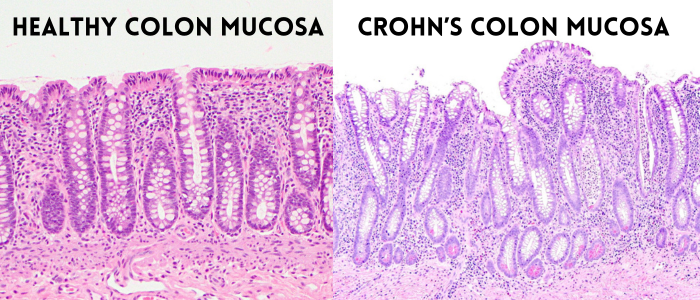
Pediatric CD is a rare disease that is characterized by the inflammation of the lining of the gastrointestinal tract which may include anywhere from the mouth to the anus of the patient, although the most affected areas are the small intestine and the colon (Ranasinghe IR 2024). In addition to gastric and digestive problems, children with this disease often exhibit stunted growth, delayed puberty and anemia (von Allmen 2018).
As previously mentioned, the reasons for CD onset is unclear, but there is vast evidence suggesting that a dysregulated immune response to environmental conditions and susceptible gut microbiome increases the frequency of the disease. One of the main characteristics of CD is that it has flares and remissions, in which the disease becomes more severe and in need of more drastic measures. The constant inflammation of the lining of the intestinal walls causes scarring which then leads to strictures and fistulas.
Previous literature on CD has tried to find genetic factors contributing to it in order to create better medical treatment options. One of these studies, has found 140 genes associated with the disease through a Genome-Wide Association Study (GWAS) which look for statistically significant differences in allele frequencies. From the GWAS that was conducted in 2009 in a Japanese population, researchers found at least 50% of genes are shared with other genes that contribute to immune-deficiencies (Liu et al 2014). The importance of this finding is the ability to trace back a strong candidate CD gene to a phenotype (such as scarring), which would lead to the creation of a better treatment plan for Pediatric CD patients.
Chen et al had goals of improving prediction techniques by applying machine learning techniques with lower margin of errors than previous techniques, in addition to identifying genes that are expressed in CD and complicated CD. They conducted a study with 120 patients under 18, who they divided based on their disease complication to multiple categories: a control group who had no evidence of gut inflammation, no fistulas nor strictures (B1), patients with strictures (B2), patients with fistulas (B3), progression to surgery, and remission.
Tissues were collected from uninflamed samples from the colon and the small intestine, then the tissue was fixed using a common tissue preservative. RNA was then isolated from the preservative and then they eliminated contamination from RNA using DNase (enzyme that degrades DNA). RNA analysis is capable of showing de-novo gene expression and the levels of gene expression which point towards a certain phenotype. The Principal Component Analysis (PCA) showed that batch, sex, and Transcript Integrity Number (TIN) drove the most variation between the samples. PCA is a method used to study variation between samples, and TIN measures RNA degradation (Wang et al 2016). These three categories were used to train the model to predict the progression of the disease.
For their model, they chose LASSO, which is a common statistical and machine learning regression model that identifies a set of predictable features efficiently, as well as deep neural networks (NN), a deep learning algorithm, among other approaches. Using these models and RNA-seq data they found 33 genes that were differentially expressed in B2 (stricture) stage patients in comparison to the control. Interestingly, their data does not show differential expression for other stages aside from B2, because of the heterogeneity of B3 they were not able to model its complications.
The study highlights the importance of the extracellular matrix (the proteins that structure cells and tissues) and inflammatory pathways for Pediatric CD complications. The study finds that the colonic RNA is differentially expressed in patients with CD in comparison to control patients, specifically in B2 stage of the disease. Chen et al also suggest that machine learning is a powerful, reliable tool for the prediction of the progression of the disease and could help guide medical decisions for patients in the future.Chen et al explicitly acknowledge the potential medical biases in their studies.
First, since the study involved patients in a hospital -specifically individuals under 18 years old- it was hard to capture all the data necessary from the patient. Secondly, their database was very small and taken from one institution. In a study involving the gastrointestinal tract, it is crucial to have information from people from diverse backgrounds and diverse diets to understand how their gut microbiome affects the progression of CD. Thirdly, they were unable to show differential expression for other stages, which is a problem that they say was encountered in previous studies. This paper is an important one in that it highlights a new approach to predict the development of a chronic, often complicated disease. It is important to note, however, the bias of machine learning by the input that they are given. Although the researchers suggest that this method can be replicated, the population data might skew the prediction, especially since previous literature shows the higher prevalence of CD in European populations. This paper creates a strong basis for the development of new models for the prediction of disease progression.
References
- Chen, K.A., Nishiyama, N.C., Kennedy Ng, M.M. et al. Linking gene expression to clinical outcomes in pediatric Crohn’s disease using machine learning. Sci Rep 14, 2667 (2024). https://doi.org/10.1038/s41598-024-52678-0
- Liu, Jimmy Z, and Carl A Anderson. “Genetic studies of Crohn’s disease: past, present and future.”Best practice & research. Clinical gastroenterology vol. 28,3 (2014): 373-86. doi:10.1016/j.bpg.2014.04.009
- Ranasinghe IR, Hsu R. Crohn Disease. [Updated 2023 Feb 20]. In: StatPearls [Internet]. Treasure Island (FL): StatPearls Publishing; 2024 Jan-. Available from: https://www.ncbi.nlm.nih.gov/books/NBK436021/
- von Allmen D. Pediatric Crohn’s Disease. Clin Colon Rectal Surg. 2018 Mar;31(2):80-88. doi: 10.1055/s-0037-1609022. Epub 2018 Feb 25. PMID: 29487490; PMCID: PMC5825885.
- Wang, L., Nie, J., Sicotte, H. et al. Measure transcript integrity using RNA-seq data. BMC Bioinformatics 17, 58 (2016). https://doi.org/10.1186/s12859-016-0922-z
Iasa Hatem
iahatem@davidson.edu
© Copyright 2022 Department of Biology, Davidson College, Davidson, NC 28036

This is incredibly interesting! I was very unfamiliar with these different machine-learning techniques, and I had no idea of the various uses they could have especially in predicting pediatric Crohn’s Disease. I think it’s very important and impressive to trace back phenotypes to genotypic markers, and I think the use of these newly coded machine-learning techniques to do so will be very insightful in creating new pathways in future directions for this research. I wonder if the difficulties faced in finding expression correlations in other stages are partially due to the machine learning software or there is some unknown biological reason.
they did mention some biological difficulties- the data they trained their machines for was not complete and even the machine was unable to be accurate about its findings.
Hey Iasa, I’m glad I learned something new after reading your article. I’ve never heard of Crohn’s disease, and I love learning about new diseases and how they function because there are so many of them to uncover. Although there are no clear reasons for the disease despite some linkage to the dysregulation of immune response to the microbiome and environment, the authors used machine learning to discover genes responsible for this disease. This is one aspect of technology/AI crucial for its sustenance in healthcare. I’m not surprised there are few discussions about CD, probably because it’s rare, which you highlighted. I’m curious to learn more about how batch and sex contributed to variation in the study and if they play a part in the different colonic expressions among both groups.
Truly appreciate your well-written posts. I have certainly picked up valuable insights from your page. Here is mine Webemail24 about Search Engine Optimization. Feel free to visit soon.
I came across your site wanting to learn more and you did not disappoint. Keep up the terrific work, and just so you know, I have bookmarked your page to stay in the loop of your future posts. Here is mine at Seoranko about Data Mining. Have a wonderful day!
Thank you for sharing this information! If you need some details about Auto Export than have a look here Autoprofi
This was a very good post. Check out my web page Articlecity for additional views concerning about Bitcoin.
Your site visitors, especially me appreciate the time and effort you have spent to put this information together. Here is my website Articleworld for something more enlightening posts about Social Media Marketing.
Truly appreciate your well-written posts. I have certainly picked up valuable insights from your page. Here is mine Article Sphere about Crowdfunding. Feel free to visit soon.