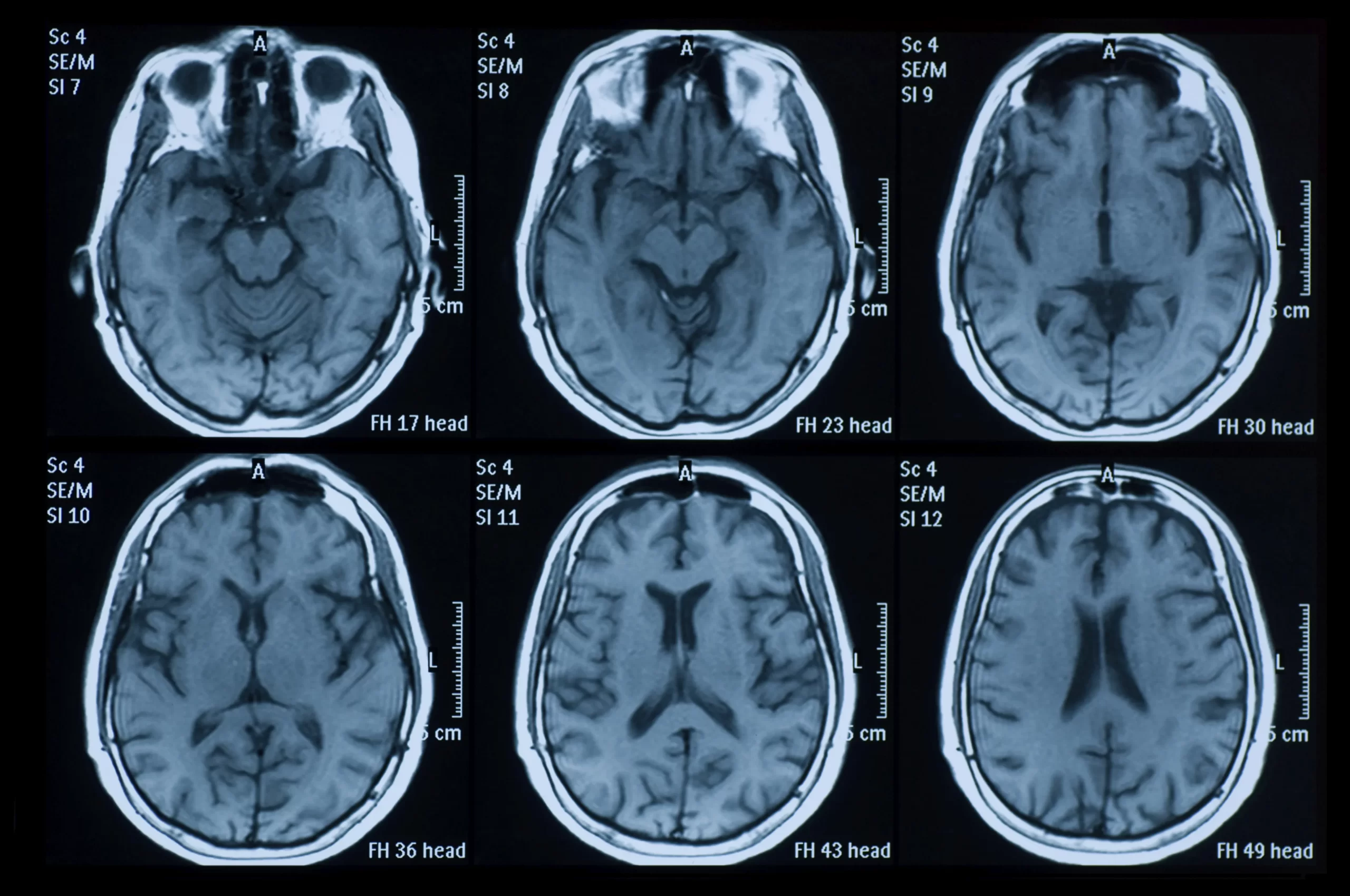
After careful sequencing and identification of different cell strains, Q. Wang et al. found convincing evidence that Parkinson’s Disease impacts more of the brain than we thought.
This web page was produced as an assignment for an undergraduate course at Davidson College.
Since its discovery in 1817, Parkinson’s Disease has been a notorious neurological disorder and spurring countless studies(Goetz CG 2011). Parkinson’s Disease is a neurodegenerative disease that occurs in the Substantia Nigra, or the region of the brain that controls motor function, dopamine production, and emotional regulation(Sonne J, Reddy V, Beato MR 2022). In the brains of those with Parkinson’s, dopaminergic neurons are broken down, breaking important pathways which are meant to aid dopamine release and muscle movements. In this study carried out by Q. Wang et al, they investigate if dopaminergic neurons are the only cell that is adversely impacted by Parkinson’s in the Substantia Nigra. In order to carry out this research, 23 post-mortem samples with Parkinson’s Disease were collected alongside 9 post-mortem healthy samples. These samples were sequenced and clustered based on similarities in the isolated nuclei. Once in the clusters, they were assigned cell types based on specific genome regions that are uniquely expressed in certain cells. With the cellular layout of the Substantia Nigra established in both healthy and diseased samples, comparisons could be made. After accounting for the sample size discrepancy, One cluster composed of neurons exhibited significant decline in Parkinson samples. This cluster includes dopaminergic neurons, and is defined by the RIT2 gene encoding for GTPase, which contributes to sending signals down the axons(Kearney PJ et al. 2023). Following the difference in prevalence identification, genetic differences were analyzed. Q. Wang et al. found a variety of genes which were both up and down regulated. Notable functions up-regulation included heat shock protein synthesis, detoxification, and cytoprotection genes. The down-regulated proteins were mainly synapse and dopamine regulatory genes. This change in gene expression brings about important information supporting previous knowledge and raising further questions.
The down-regulated genes that were found align with the common symptoms of Parkinson’s Disease. Less synapses in the Substantia Nigra corresponds to the loss of neuron pathways, and less dopamine regulation can lead to mood swings and apathy. The upregulation isn’t as straightforward. How does an increase in heat shock protein synthesis, detoxification, and cytoprotection genes impact the progression of Parkinson’s? A future study should be carried out to test the impacts on neurons containing RIT2 when the mentioned genes are upregulated independently. Other studies that may arise from this research touch on the presence of dopaminergic neurons in Parkinson’s samples, despite their expectation to degenerate throughout the course of the disease.
It is mentioned in the paper that RIT2+TH+ neurons were identified in the post-mortem Parkinson’s Disease samples. TH+, or tyrosine hydroxylase positive neurons refer to dopaminergic neurons as TH is their marker gene. The samples are taken after death, which would be the latest stage of Parkinson’s. This indicates that there are qualities in some dopaminergic neurons that save them from degeneration. In order to investigate this phenomenon, a new study could be carried out where the surviving neurons are isolated and sequenced from post-mortem Parkinson’s samples. The sequences that only appear in healthy nuclei samples will be contrasted against those that appear in both healthy and diseased nuclei samples to find significant differences. Differential regions in the dopaminergic neuron nuclei could provide insight into what Parkinson’s Disease targets in a cell, or what factors render cells immune to the disease’s progression.
While it is important for more information to be gathered in order to work towards lessening the effects of Parkinson’s, ethical implications of current and future studies are also crucial to consider. In the study carried out by Q. Wang et al, all 32 samples were taken from post-mortem subjects. In this scenario, it is important that the subjects had indicated their agreement to this study before their passing, or that their family members were ok with the sampling. This consent must be informed, and the findings should’ve been shared with families of the sampled subjects for another round of consent before publication. Regarding future studies of Parkinson’s Disease, there is a significant ethical issue to keep in mind. A huge block in Parkinson’s research is the fact that disease progression can’t be tracked. This is because there are major ethical implications surrounding sampling cells from the brain of a living human with or without a disease. While these ethical roadblocks make it hard to understand more about this neurodegeneration, it is still important to research Parkinson’s within the allotted guidelines.
Overall, the research carried out by Q. Wang et al. has revealed significant new information regarding Parkinson’s Disease. While dopaminergic neurons were further proven to degenerate, multiple other subgroups of neurons containing RIT2 showed signs of degeneration as well. Across these neurons, multiple genes were found to be up or downregulated in Parkinson’s samples compared to healthy samples. Using this information and information from future studies, it seems as though steps are being taken in the right direction to understand and combat Parkinson’s Disease.
References
- Qian Wang et al. ,Molecular profiling of human substantia nigra identifies diverse neuron types associated with vulnerability in Parkinson’s disease.Sci. Adv.10,eadi8287(2024).DOI:10.1126/sciadv.adi8287
- Goetz CG. The history of Parkinson’s disease: early clinical descriptions and neurological therapies. Cold Spring Harb Perspect Med. 2011 Sep;1(1):a008862. doi: 10.1101/cshperspect.a008862. PMID: 22229124; PMCID: PMC3234454.
- Sonne J, Reddy V, Beato MR. Neuroanatomy, Substantia Nigra. [Updated 2022 Oct 24]. In: StatPearls [Internet]. Treasure Island (FL): StatPearls Publishing; 2024 Jan-. Available from: https://www.ncbi.nlm.nih.gov/books/NBK536995/
- Kearney PJ, Zhang Y, Tan Y, Kahuno E, Conklin TL, Fagan RR, Pavchinskiy RG, Shafer SA, Yue Z, Melikian HE. Rit2 silencing in dopamine neurons drives a progressive Parkinsonian phenotype. Res Sq [Preprint]. 2023 May 25:rs.3.rs-2944614. doi: 10.21203/rs.3.rs-2944614/v1. Update in: NPJ Parkinsons Dis. 2024 Feb 23;10(1):41. PMID: 37293098; PMCID: PMC10246263.
Charlie Elliott
© Copyright 2022 Department of Biology, Davidson College, Davidson, NC 28036.

This was a very interesting article to read! I took a course last semester where we induced and observed Parkinson’s Disease in rats by decreasing the number of functional dopaminergic neurons in the Substantia Nigra pathway. I was not aware that more than just dopaminergic neurons were affected, and I would be interested to know how the loss of these neurons also impacts the symptoms of Parkinson’s Disease. Dopamine impacts many processes in the body, including mood, motor function, and even digestion. If more than just these neurons are lost during disease progression, how might they be involved in the presentation of Parkinson’s Disease? Could there also be differences in the methylation patterns of neurons that impact not only disease symptoms, but also disease progression?
This was a very interesting article to read! I took a course last semester where we induced and observed Parkinson’s Disease in rats by decreasing the number of functional dopaminergic neurons in the Substantia Nigra pathway. I was not aware that more than just dopaminergic neurons were affected, and I would be interested to know how the loss of these neurons also impacts the symptoms of Parkinson’s Disease. Dopamine impacts many processes in the body, including mood, motor function, and even digestion. If more than just these neurons are lost during disease progression, how might they be involved in the presentation of Parkinson’s Disease? Could there also be differences in the methylation patterns of neurons that impact not only disease symptoms, but also disease progression?
This was a really informative and interesting read. I recently lost a family friend to Parkinson’s Disease, and at the time, it just felt like a nebulous and scary disease, so in some ways, it is helpful to understand the mechanisms behind the symptoms I witnessed and to put everything into a scientific context. This paper is also super interesting because it reminds me of a lot of research I am currently conducting on Tourette syndrome. A lot of the specific areas of the brain affected in Parkinsons (related to synapses and dopamine) are also a big part of Tourettes. Upon further thought, this connection makes sense due to the muscular symptoms of both conditions, but was a connection I wouldn’t have otherwise considered. Finally, I think the ethical aspects of this study are worth mentioning. When my uncle died this summer, I spent about an hour on the phone with a hospital minutes after he was declared dead to discuss organ donation. While I am a huge supporter of organ donation and scientific studies that use organs (I plan to donate myself), it felt really invasive and painful at the time. I think in the future, it might be helpful to rethink the way that the families of human donors are contacted to make the process more considerate.