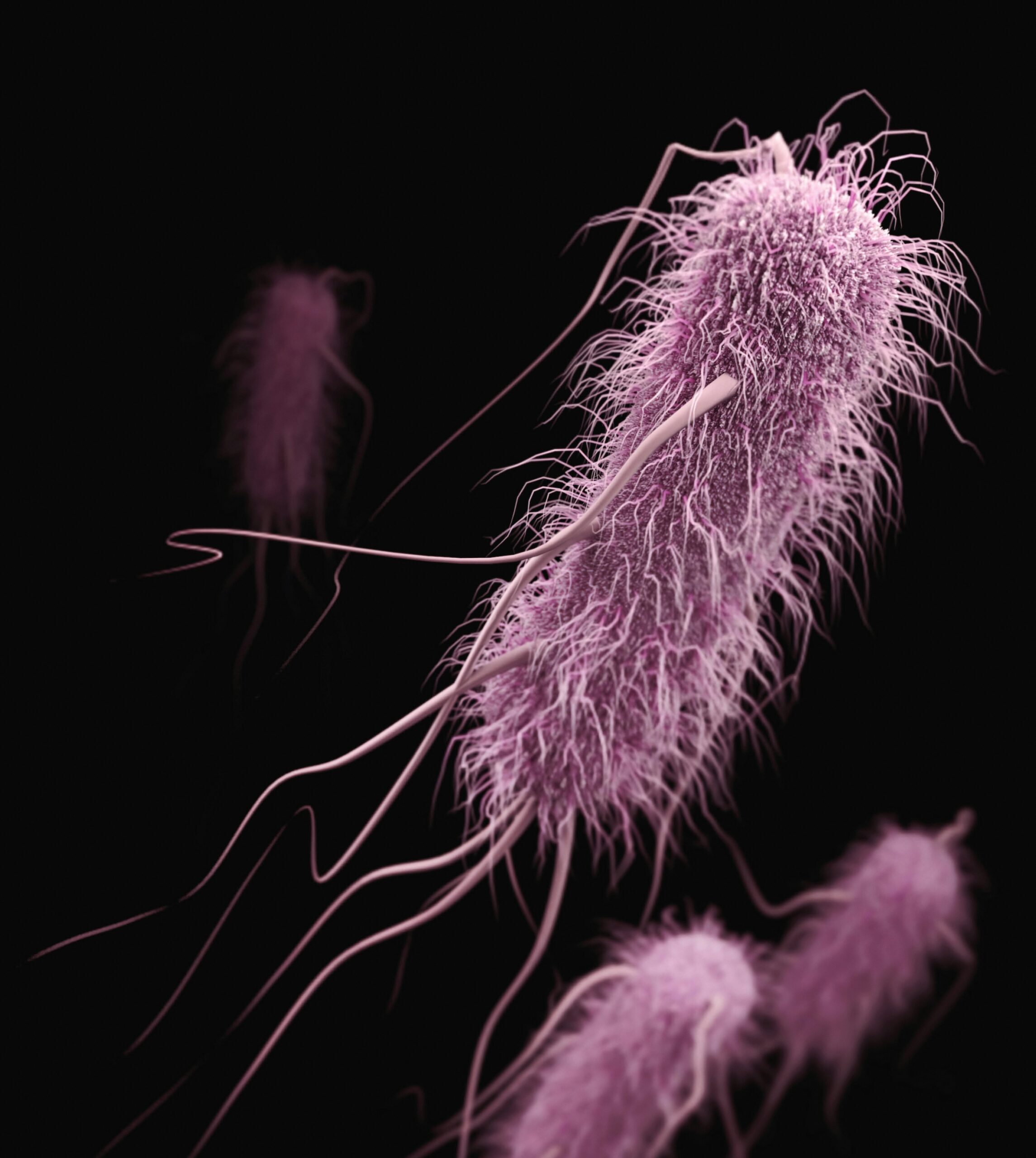
Scientists studied the metagenomics of the intestinal microbiome of fecal matter transplant donors and recipients to gain an understanding of which bacterial taxa are successful in recolonizing the fecal transplant recipient’s gut after CDI. Bacterial species that demonstrated genomic evidence of high metabolic independence exhibited better survivability in high-stress conditions than those with lower independence.
This web page was produced as an assignment for an undergraduate course at Davidson College.
The human large intestine is home to trillions of bacteria from over a thousand species that make up the microbiome (Shreiner et al. 2015). The vast majority of these are beneficial or neutral and aid in the fermentation and breakdown of food waste passing through the gastrointestinal tract, as well as support the immune and nervous systems. Like infectious bacteria, these organisms are sensitive to antibiotics. So while someone prescribed an antibiotic may be clearing their system of a pathogen, they may also be disrupting the microbiome in the process. Clostridium difficile is an opportunistic bacteria that has evolved to prevail and take over as the beneficial bacteria begin to die off (Abt et al. 2016). A Clostridium difficile infection (CDI) leaves the person with severe diarrhea, colon inflammation, and can occasionally be fatal. Only a few antibiotics, such as vancomycin, are able to treat CDI, though it often recurs multiple times. However, fecal microbiota transplant involves the reintroduction of good bacteria into the gut and shows promise towards lasting relief.
The metagenomic study by Watson et al. analyzes the microbiome diversity of both fecal transplant donors and recipients (Watson et al. 2023). Stool samples for two donors, A and B, were taken over the course of about two years. Ten patients with recurring CDI were treated, with five participants recieving each of the donors’ samples. Following transplantation, recipients also had samples taken at regular intervals and their intestinal metagenomes sequenced. The researchers analyzed the diversity of bacteria across samples by sequencing sample genomes and mapping them to microorganism reference genomes.
All transplant recipients experienced an increase in microbial diversity, with some species increasing dramatically in relative abundance over time and others leveling off.. Interestingly, Bacteroidetes species had a much higher relative abundance in recipient microbiomes versus their respective donors’. Donor A had a median relative abundance of 5% while their recipients boasted 33%, and Donor B had a relative abundance of 17% with recipients having 45%. This significant difference sparked curiosity in the researchers about the ability of different bacterial species to successfully colonize a high-stress environment.
The researchers pulled the 20 best gut colonizers and the 20 worst and first determined genome length. The good colonizer group had longer genomes on average, suggesting the presence of additional, beneficial genes. Next, they conducted an analysis of the metabolic properties associated with microbial genes. There were 33 metabolic modules, or sets of functions associated with metabolism and chemical cycling, that were notable in the good colonizing group. The majority were related to biosynthesis, or the generation of large molecules within a cell, and others to the metabolism of specific molecules, including amino acids, vitamins, or carbohydrates. Because some of the modules were also enriched in poor colonizers, the scientists looked at completeness of different metabolic pathways. Poor colonizers generally displayed lower scores, and were missing several genes that could encode pathway components.
Bacterial populations that were able to perform more biosynthetic functions on their own were said to have achieved high metabolic independence. The researchers hypothesized that these populations have a selective advantage when introduced into high-stress environments, such as the large intestines of CDI patients. Additionally, they said a healthy gut environment could support species with a wider variety of metabolic independence levels, as seen in the donor samples. This is because metabolic products are often exchanged between organisms.
To further confirm their hypothesis, the team performed a similar metagenomic analysis of the microbiomes of inflammatory bowel disease patients. Bacteria present in the colons of these patients had significantly longer genomes, similar to fecal transplant recipient colonizers. This indicates longer genomes are crucial for success in an inflammatory environment. They performed pathway completion analysis using the same 33 metabolic modules from before, and results were “almost identical” between highly metabolically independent populations from the fecal transplant cohort and those found in inflammatory bowel patients. This suggests that the high-stress, inflammatory environments were selecting for bacteria with metabolic independence and strong biosynthetic capacity.
The findings by Watson and colleagues provide possible insights into the treatment of colitis conditions and prevention of CDI using a microbiological approach. Probiotics are over-the-counter supplements that contain billions of live bacterial cultures meant to increase gut biodiversity and alleviate mild gastrointestinal complaints (Kechagia et al. 2013). In addition, they are often recommended for patients taking antibiotics to prevent the depletion of beneficial bacteria and the subsequent domination by C. diff. A future direction for scientists could involve the formulation of lab-grown probiotic medication using HMI bacteria species in hopes of treating CDI. The cohort sizes studied by Watson and colleagues were also quite small, and no description of subject background was given. The researchers state that they did not account for sociological and environmental factors that could affect microbiome composition, including age or gender. In order to ensure that scientific advances benefit the people, it is imperative that scientists widen their sample sizes to include people from all backgrounds.
© Copyright 2024 Department of Biology, Davidson College, Davidson, NC 28036
Abt M. C., P. T. McKenney, and E. G. Pamer, 2016 Clostridium difficile colitis: pathogenesis and host defence. Nat Rev Microbiol 14: 609–620. https://doi.org/10.1038/nrmicro.2016.108
Kechagia M., D. Basoulis, S. Konstantopoulou, D. Dimitriadi, K. Gyftopoulou, et al., 2013 Health Benefits of Probiotics: A Review. ISRN Nutrition 2013: 1–7. https://doi.org/10.5402/2013/481651
Shreiner A. B., J. Y. Kao, and V. B. Young, 2015 The gut microbiome in health and in disease. Curr Opin Gastroenterol 31: 69–75. https://doi.org/10.1097/MOG.0000000000000139
Unsplash, 2021 Photo by CDC on Unsplash
Watson A. R., J. Füssel, I. Veseli, J. Z. DeLongchamp, M. Silva, et al., 2023 Metabolic independence drives gut microbial colonization and resilience in health and disease. Genome Biology 24: 78. https://doi.org/10.1186/s13059-023-02924-x

Your post about studying gut bacteria and fecal transplants really caught my attention, especially the witty title “scoop on poop” – love it! It got me thinking about my own gut health and how important it is to understand our microbiome. Interestingly, it resonates with my cousin’s ongoing stomach issues. She’s been dealing with persistent gas, bloating, and abdominal discomfort but hasn’t been able to pinpoint the cause. Considering how gut bacteria might be involved in such conditions, I wonder if fecal transplant therapy could offer her relief. It’s comforting to know there are natural and more accessible options like probiotics, which she enjoys in foods like kimchi and kombucha, that could potentially introduce beneficial bacteria to her gut. Thanks for sharing!
The commensal microbiome is definitely a fascinating topic. It makes sense that the more metabolically independent bacteria are more able to survive in harsh, inflammatory environments. It’s good that we are gaining an understanding of which factors enable bacteria to better colonize new hosts. The ability of the commensal microbiome to outcompete harmful outsiders is an important factor in host immunity, and repairing this barrier will likely be an important part of treating opportunistic infections like C. diff.
The fact that the researchers did not account for the background of the subjects is certainly a deficiency in their work. The lab I am in studies the interaction between the microbiome and the immune system, and we’ve definitely noticed both age- and sex-dependent effects.