Tuberculosis continues to be a leading cause of death globally, but its genetic susceptibility has not yet been completely understood. A meta-analysis consisting of 12 genome-wide association studies (GWAS) studied the heritability and significant genes contributing to tuberculosis susceptibility.
This web page was produced as an assignment for an undergraduate course at Davidson College.
by Lizabella Nadelson
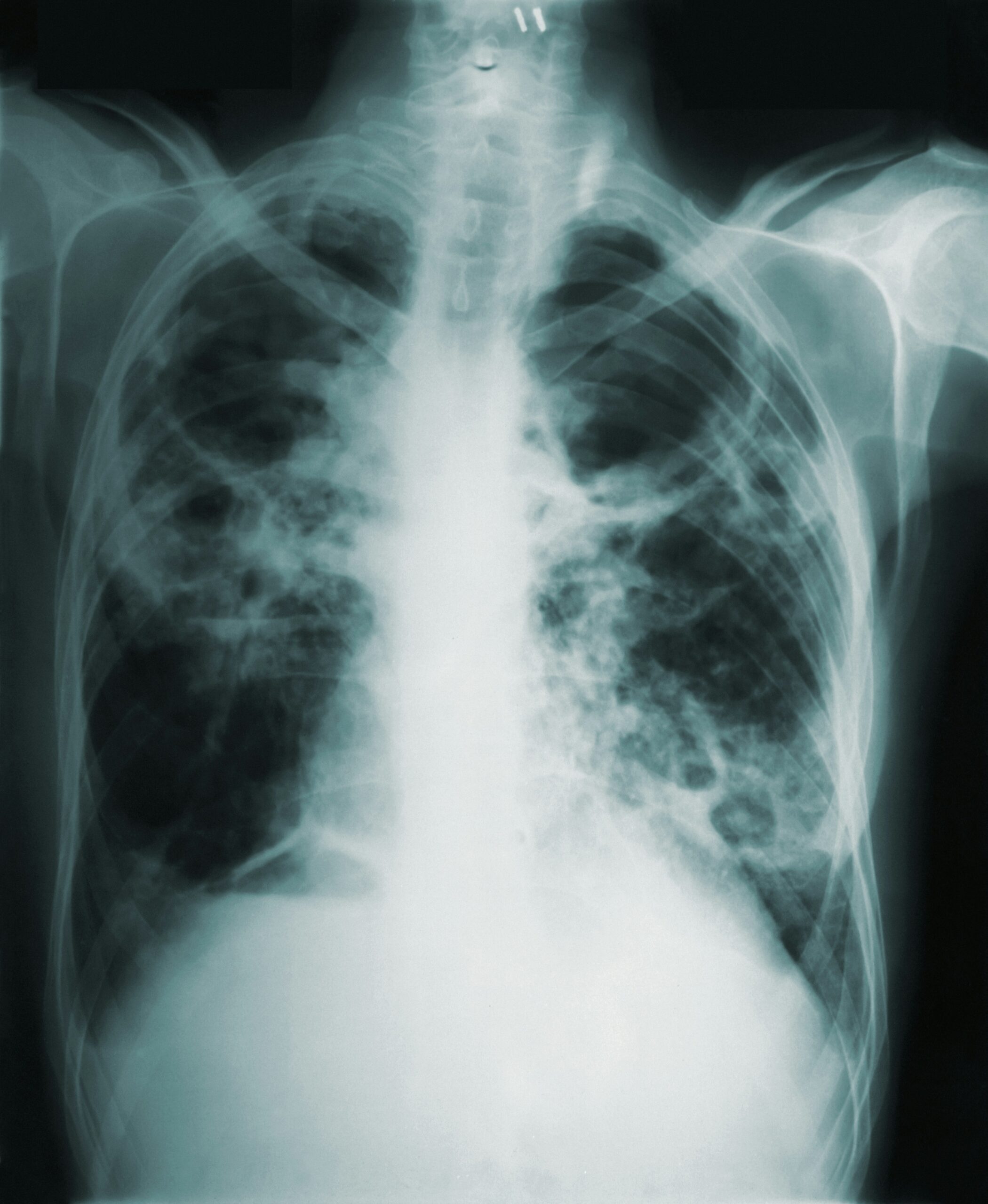
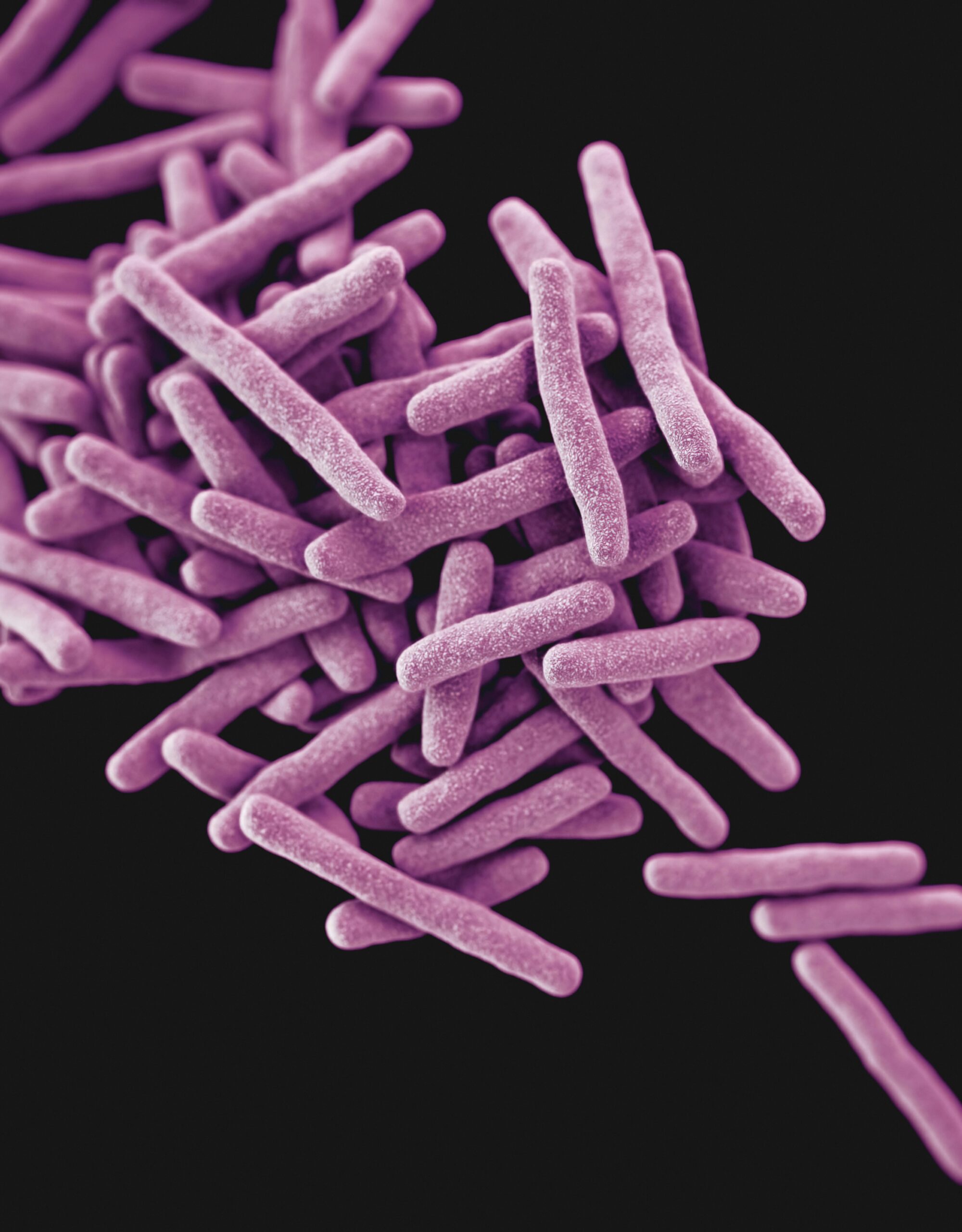
Tuberculosis – an airborne infection caused by a bacteria, conveniently called Mycobacterium tuberculosis – continues to be a leading cause of death worldwide2. M. tuberculosis can affect any part of the body and is categorized in two stages: latent (in which bacteria are isolated inside granulomas, or clusters of cells) and contagious (or “active”, when the patient shows symptoms including cough, fever, night sweats)2. Current treatments involve antimicrobials over durations ranging from months to under a year3. While treatments are available, tuberculosis continues to be a global leading cause of death, so goals for better understanding genetic susceptibility can eventually provide insight to better prevention and treatments.
Until the past few decades, understanding genetic susceptibility for diseases was not possible without genome-wide association studies (GWAS). GWAS compare genomes (or the genetic sequence of an individual) of many different people and can identify common genes that are associated with a disease. To find results that are significant and representative world-wide, GWAS can be compiled to study large sample sizes from around the world, as was done in this paper by Schurz et al.
The meta-analysis study by Schurz et al. aimed to identify genes attributing to tuberculosis susceptibility and to see if genetic heritability plays a role1. To analyze genes from a variety of genetic ancestries, the researchers compiled 12 previous tuberculosis-aimed GWAS from nine countries, which included over 14,000 individuals with tuberculosis and 19,500 controls. After overlaying all the genome sequences over each other to identify variants that differ in tuberculosis-cases compared to controls, the researchers identified 26.6 million variants that were found in more than 1 person and were present in at least 3 study datasets, then narrowing down to 3.2 million variants that were found in all 12 datasets.
To further narrow down specific areas in the genome (or loci) that are significant in tuberculosis cases, the researchers plotted variants on an x-axis of chromosome location from 1-22 (excluding sex chromosome 23) versus y-axis of significance, resembling the Manhattan skyline for which its namesake is the “Manhattan plot”1. What they found was that a region of chromosome 6 was most significant in all 12 datasets (see image below). Closer analysis of this region of chromosome 6 showed that this is the HLA class II (or HLA-II) region, which is important in the immune system as it codes for proteins essential for antigen (often a foreign molecule) presentation to signal a start of the body’s immune system.

The issue arose when attempting to identify which genetic variants (or alleles) in particular at this HLA-II location can be attributed to tuberculosis susceptibility. Although one significantly associated variant was identified, rs28383206, further association testing between this variant and the HLA-II location did not show consistent significant results. The researchers concluded that the variable role of the HLA-variant in different populations may be attributed to differences of infectious pressures in each geographical area, as some M. tuberculosis strains vary by region and may have adapted to the HLA allele of the population within the region. Additional loci were identified within ancestry group analysis although they did not reach significance across all 12 studies, but may prove to be useful to study in future analyses.
Although genomic analysis identified the HLA-II loci as a significant association for tuberculosis, the difficulties of identifying significantly associated loci and alleles lies in the problem of confounding variables. Factors such as socioeconomic, environmental, and varying levels of infection pressures likely contribute in addition to genetic predispositions, which interfere with genomic data analysis to identify contributing genetic variants.
This multi-ancestry meta-analysis of genetic susceptibility shows just how difficult it is to identify significant variants that can be applied to larger populations and directly applied in treatment development at the moment. The goal with these studies is to continue to accumulate larger sets of genomic data to eventually determine better genomic parameters that can infer modes of categorization for which individuals are susceptible to which diseases. As with previous biomedical developments, ethical issues may arise when attempting to categorize individuals into groups based on genetic parameters, but the hope is to eventually provide a better mode of treatment and disease identification that is specially tailored to the individual.
References
- Schurz H, Naranbhai V, Yates TA, et al. Multi-ancestry meta-analysis of host genetic susceptibility to tuberculosis identifies shared genetic architecture. Young A, Kana BD, Young A, eds. eLife. 2024;13:e84394. doi:10.7554/eLife.84394
- Pai M, Behr MA, Dowdy D, et al. Tuberculosis. Nat Rev Dis Primers. 2016;2(1):1-23. doi:10.1038/nrdp.2016.76
- Peloquin CA, Davies GR. The Treatment of Tuberculosis. Clinical Pharmacology & Therapeutics. 2021;110(6):1455-1466. doi:10.1002/cpt.2261
Genomics News and Views
Author: Lizabella Nadelson
Contact: linadelson@davidson.edu
© Copyright 2022 Department of Biology, Davidson College, Davidson, NC 28036.

It is interesting to consider the possibility that genetic variation within the population can increase susceptibility to tuberculosis. I am curious about the next steps for this research. It looks like there were a few correlations found, as seen with the HLA allele, but nothing super causative. This is such a crucial area of research considering the implications, like better treatment options, it could provide for such a serious disease.
I was expecting to read that there is a type of genetic variation that makes people more susceptible to catching tuberculosis, similar to the results from the COVID GWAS study. I feel like this case is a clear example of correlation does not equal causation. I think further studies should be done on what the variation on chromosome 6 contributes to. It will be interesting to see whether this variation is a neutral or if it has an effect on something else. I wonder if the variation within the population included in the GWAS affected the results.